Although many baby sleep trainers claim there is no evidence of harm from practices such as controlled crying, it’s worth noting that there is a vast difference between ‘no evidence of harm’ and ‘evidence of no harm’.
A policy statement on controlled crying issued by the Australian Association of Infant Mental Health (AAIMHI) advises, ‘Controlled crying is not consistent with what infants need for their optimal emotional and psychological health, and may have unintended negative consequences.’
According to AAIMHI, ‘There have been no studies, such as sleep laboratory studies, to our knowledge, that assess the physiological stress levels of infants who undergo controlled crying, or its emotional or psychological impact on the developing child.’
What is the con of controlled crying?
Despite the popularity of controlled crying, it is not an evidence-based practice. In a talk at the International Association of Infant Mental Health 9th World Congress held in Melbourne in 2004, Professor James McKenna, Director of the Mother-Baby Behavioural Sleep Laboratory at the University of Notre Dame, and acclaimed SIDS expert, described controlled crying as ‘social ideology masquerading as science’.
What this means is that despite a plethora of opinions on how long you should leave your baby to cry in order to train her to sleep, nobody has studied exactly how long it is safe to leave a baby to cry, if at all.
Babies who are forced to sleep alone (or cry, because many do not sleep) for hours may miss out on both adequate nutrition and sensory stimulation such as touch, which is as important as food for infant development. Leaving a baby to ‘cry it out’ in order to enforce a strict routine when the baby may, in fact, be hungry, is similar to expecting an adult to adopt a strenuous exercise program accompanied by a reduced food intake. The result of expending energy through crying while being deprived of food is likely to be weight loss and failure to thrive.
Paediatrician William Sears has claimed that, “babies who are ’trained’ not to express their needs may appear to be docile, compliant or ‘good’ babies. Yet, these babies could be depressed babies who are shutting down the expression of their needs.”
What Happens To A Baby When He Cries?
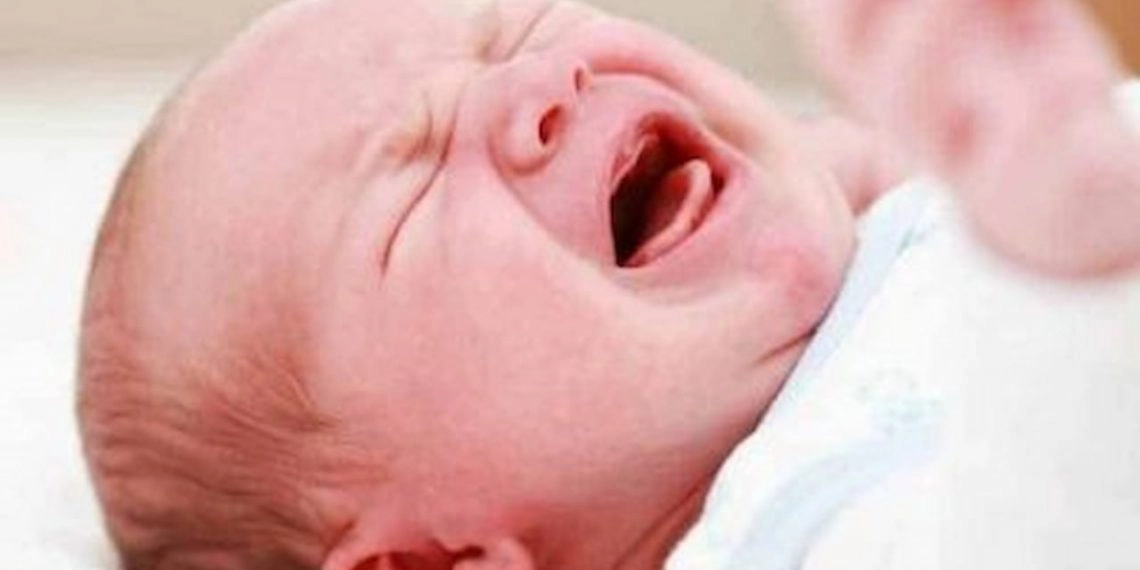
Crying infants experience an increase in heart rate, body temperature and blood pressure. These reactions are likely to result in overheating and, along with vomiting due to extreme distress, could pose a potential risk of SIDS in vulnerable infants. There may also be longer-term emotional effects. Babies need our help to learn how to regulate their emotions, meaning that when we respond to and soothe their cries, we help them understand that when they are upset, they can calm down.
On the other hand, when infants are left alone to cry it out, they fail to develop the understanding that they can regulate their own emotions. There is also compelling evidence that increased levels of stress hormones may cause permanent changes in the stress responses of the infant’s developing brain. These changes then affect memory, attention, and emotion, and can trigger an elevated response to stress throughout life, including a predisposition to later anxiety and depressive disorders.
English psychotherapist, Sue Gerhardt, author of ‘Why Love Matters: How Affection Shapes a Baby’s Brain’, explains that when a baby is upset, the hypothalamus produces cortisol. In normal amounts cortisol is fine, but if a baby is exposed for too long or too often to stressful situations (such as being left to cry) its brain becomes flooded with cortisol and it will then either over- or under-produce cortisol whenever the child is exposed to stress. Too much cortisol is linked to depression and fearfulness; too little to emotional detachment and aggression.
Stress levels in infancy may have implications for learning, too. While it seems fairly obvious that a calm baby will be available for learning, studies have shown that children with the lowest scores on mental and motor ability tests were those with the highest cortisol levels in their blood. There is also research showing that children with anxiety disorders have a higher level of sleep difficulties as infants.
Although these studies weren’t about controlled crying and I am making no direct connection, my point is that perhaps some of the babies who are presenting with sleep difficulties are infants who need extra help to regulate their emotions or are more sensitive to stress, so it is possible that these little people would be more at risk if they were exposed to controlled crying. One of the arguments for using controlled crying is that it ‘works’, but perhaps the definition of success needs to be examined more closely.
In the small number of studies undertaken, while most babies will indeed stop waking when they are left to cry, ‘success’ varies from an extra hour’s sleep each night to little difference between babies who underwent sleep training and those who didn’t, eight weeks later. Some studies found that up to one-third of the babies who underwent controlled crying ‘failed sleep school’.
An Australian baby magazine survey revealed that although 57% of mothers who responded to the survey had tried controlled crying:
- 27% reported no success
- 27% found it worked for one or two nights
- 8% found controlled crying to work for longer than a week
To me, this suggests that even if harsher regimes work initially, babies are likely to start waking again as they reach new developmental stages or conversely, they may become more settled and sleep (without any intervention) as they reach appropriate developmental levels. Controlled crying and other similar regimes may indeed work to produce a self-soothing, solitary sleeping infant.
However, the trade-off could be an anxious, clingy or hyper-vigilant child or even worse, a child whose trust is broken. Unfortunately, we can’t measure attributes such as trust and empathy which are the basic skills for forming all relationships. We can’t, for instance, give a child a trust quotient like we can give him an intelligence quotient.
Can Controlled Crying Cause Disconnect?
One of the saddest emails I have received was from a mother who did controlled crying with her one-year-old toddler. “After a week of controlled crying he slept, but he stopped talking (he was saying single words). For the past year, he has refused all physical contact from me. If he hurts himself, he goes to his older brother (a preschooler) for comfort. I feel devastated that I have betrayed my child.”
It is the very principle that makes controlled crying ‘work’ that is of greatest concern: when controlled crying ‘succeeds’ in teaching a baby to fall asleep alone, it is due to a process that neurobiologist Bruce Perry calls the ‘defeat response’. Normally, when humans feel threatened, our bodies flood with stress hormones and we go into ‘fight’ or ‘flight’. However, babies can’t fight and they can’t flee, so they communicate their distress by crying. When infant cries are ignored, this trauma elicits a ‘freeze’ or ‘defeat’ response.
Babies eventually abandon their crying as the nervous system shuts down the emotional pain and the striving to reach out. One explanation for the success of ‘crying it out’ is that when an infant’s defeat response is triggered often enough, the child will become habituated to this. That is, each time the child is left to cry, he ‘switches’ more quickly to this response. This is why babies may cry for say, an hour the first night, twenty minutes the following night and fall asleep almost immediately on the third night (if you are ‘lucky’). They are ‘switching off’ (and sleeping) more quickly, not learning a legitimate skill.
Whether sleep ‘success’ is due to behavioural principles (that is, a lack of ‘rewards’ when baby wakes) or whether the baby is overwhelmed by a stress reaction, the saddest risk of all is that as he tries to communicate in the only way available to him, the baby who is left to cry in order to teach him to sleep will learn a much crueler lesson – that he cannot make a difference, so what is the point of reaching out. This is learned helplessness.
Recommended Baby Sleep Books
Take a look at our article on the best baby sleep books to help you find gentle methods that work and are better for your baby.
Here are some other helpful baby sleep articles: