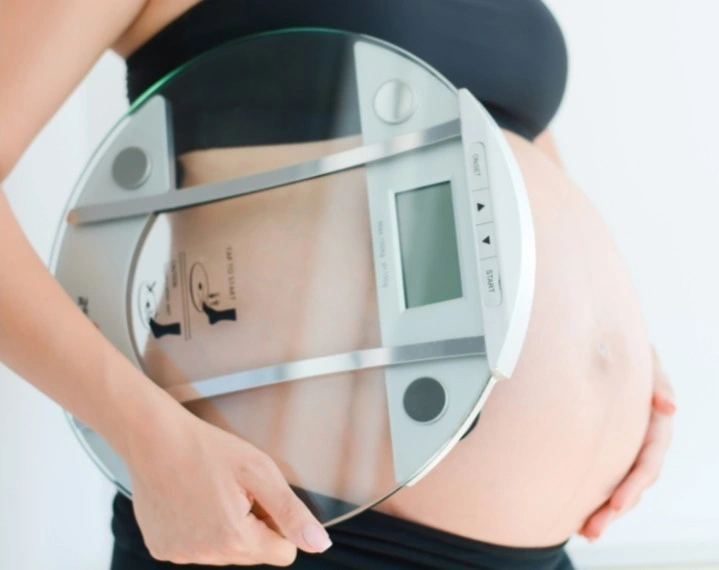
How much weight you gain during pregnancy depends on various factors, including your genetics, your diet, your cravings and the size of your baby.
Weight gain is inevitable during pregnancy but it’s worth monitoring your weight throughout pregnancy to ensure you are gaining a healthy amount. Too much or too little weight gain can affect the health of both the mother and baby.
What is a pregnancy weight gain calculator?
The BellyBelly Pregnancy Weight Gain Calculator takes the maths out of monitoring your pregnancy weight. Just enter the information and we’ll do the hard work for you, leaving you free to focus on the fun things like choosing a baby name or getting the nursery ready.
How does a pregnancy weight gain calculator work?
BellyBelly’s Pregnancy Weight Gain Calculator figures out how much weight you should gain during pregnancy to maintain a healthy baby weight. It also calculates the recommended weight gain each week, and shows whether you’re sticking to your goal weight gain so far.
How to use the pregnancy weight gain calculator
The BellyBelly Weight Gain Calculator requires the following information:
- Units. Choose whether you’d rather receive your results in metric or imperial measurements
- Height and weight. You need to put in your height and pre-pregnancy weight so the calculator can figure out your normal BMI. The calculator needs to calculate whether you were (according to BMI guidelines) underweight, normal, overweight or obese at the start of your pregnancy. Pregnant women with an underweight BMI are advised to gain more weight than those with a BMI in the obese category
- Current weight. It’s important to enter up to date information so the calculator can provide accurate results and track your recommended weight gains
- Pregnancy type. The calculator needs to know whether you’re carrying one or two babies, so it can make sure you receive the correct information, according to guidelines
- Week of pregnancy. Please put in how many weeks pregnant you are, so the calculator can determine which trimester you are in and how much weight the guidelines suggest you should have gained by this point.
In which trimester do you gain the most weight?
Most women see most of their pregnancy weight gain during the second half of their pregnancy. During these final growth stages, your baby is growing bigger and getting ready for birth, and your body is storing more fat in preparation for breastfeeding.
Where is all the weight gained in pregnancy?
The average weight gain during pregnancy is about 25-35 lbs (11.5-16 kg). Obviously the weight of babies will vary but the baby will account for around 7 lbs (3 kg) of this. But where does the rest of the weight gain go?
Your body stores fat during pregnancy, in preparation for producing breast milk after the birth of your baby. You must also consider increased volume of fluids, such as blood, amniotic fluid and other bodily fluids. According to a 2012 article published in the Indian Journal of Hematology and Blood Transfusion, blood volume increases by around 1.5 litres by the end of pregnancy.
You also need to consider extra breast tissue and the placenta. All of this additional weight will contribute to your pregnancy weight gain. Weight gain is an expected part of a healthy pregnancy but it’s essential for your baby’s health to make sure your gain is within the healthy range.
How much does a placenta weigh at 40 weeks?
According to a 2023 article published in the Journal of International Medical Research, the average placenta weighs 510 grams. That might sound surprisingly heavy, but the placenta has a vital job to do during pregnancy, making sure babies get all the nutrients and oxygen they need.
How to slow down weight gain in pregnancy?
If you are concerned about your pregnancy weight gain, ask your healthcare provider for advice, so as to avoid any high risk issues. In the meantime, focus on eating a healthy diet with balanced nutrition, and stay active during pregnancy.
Eat a healthy diet
Although the term ‘eating for two’ is commonly used, you shouldn’t be eating for two. You don’t need to increase your calorie intake during the first trimester, but the NHS recommends you eat an extra 200 calories per day during the third trimester. Although 200 calories might sound like a lot, it’s only the equivalent of a tablespoon of peanut butter with apple slices, or a small bowl of lentil soup.
Stay active
Staying active during pregnancy can help you maintain a healthy weight and prepare your body for the birth of your baby. Swimming is an excellent exercise during pregnancy because the water supports your weight. Yoga, walking and pilates are other popular choices for exercise during pregnancy.
To find out more about why you should stay active during pregnancy, check out BellyBelly’s article Benefits Of Exercise And Pregnancy | Is It Safe To Exercise?
What are the factors influencing weight gain during pregnancy?
Weight gain during pregnancy is influenced by many factors, including how many babies you are carrying, your pre-pregnancy BMI, your diet and your activity level. There are steps you can take to limit your pre-pregnancy weight gain, such as eating a healthy diet and making sure you exercise regularly throughout your pregnancy.
One of the most important steps you can take to ensure healthy weight gain is to educate yourself about pregnancy nutrition. Understanding which nutrients your body needs and how to include them in your diet can help make sure your baby gets everything that’s needed during your pregnancy.
For more information, look at our article Pregnancy Nutrition | The Most Important Things You Need To Know.
In which trimester does the baby grow the most?
Although your body is busy during the first trimester, growing your baby’s brain, eyes and skin from scratch, it’s during the final trimester that your baby’s growth accelerates. You will have more regular appointments with your healthcare provider during the third trimester so your baby’s growth and health can be monitored.
How many kg or lbs is it okay to gain in pregnancy?
The amount of weight you should gain during pregnancy depends on your pre-pregnancy Body Mass Index (BMI). Your healthcare provider will calculate your BMI at your booking-in appointment and then monitor your weight throughout the pregnancy to ensure you stay within the recommended weight range.
What is a pregnancy weight gain chart?
A pregnancy weight gain chart allows you to monitor your weight gain throughout pregnancy. The charts below tell you what to aim for, though the gain doesn’t need to be exact. The numbers in the charts provide a rough guide; if you think your weight gain is much higher or lower than recommended, speak to your healthcare provider for advice.
Take a look at this pregnancy weight gain chart; the weights are in kg:
| Pre-pregnancy Body Mass Index | Pregnant with one baby | Pregnant with twins |
| Underweight (below 18.5) | 12.5 to 18 kg | 22 to 28 kg |
| Healthy weight (18.5 to 24.9) | 11 to 16 kg | 16 to 24 kg |
| Overweight (25 to 29.9) | 6 to 11 kg | 14 to 22 kg |
| Obese (above 30) | 4 to 9 kg | 11 to 19 kg |
If you prefer weights in lbs, take a look at this pregnancy weight gain chart:
| Pre-pregnancy Body Mass Index | Pregnant with one baby | Pregnant with twins |
| Underweight (below 18.5) | 28 to 40 lbs | 50 to 62 lbs |
| Healthy weight (18.5 to 24.9) | 25 to 35 lbs | 35 to 45 lbs |
| Overweight (25 to 29.9) | 15 to 25 lbs | 31 to 50 lbs |
| Obese (above 30) | 11 to 20 lbs | 25 to 42 lbs |
How much weight do you gain for multiple births?
If you’re carrying two babies (or more), you should expect to gain more weight than a woman pregnant with one baby. Your healthcare provider will assess your weight and advise you on how much weight you should gain during pregnancy. For example, as the chart above shows, if you have a healthy BMI at the start of your pregnancy, you should expect to gain around 16 to 24 kg (35 to 45 lbs) during your pregnancy with twins.
Twin pregnancies are closely monitored, so your healthcare provider will be able to help you track your body weight for a healthy pregnancy.
What is the normal weight for a pregnant woman in kg?
As you can see from the tables above, the recommended weight gain during pregnancy depends on your pre-pregnancy BMI. The recommended weight gain for a woman with a healthy pre-pregnancy BMI is 11 to 16 kg (25 to 35 lbs).
It’s worth bearing in mind that most of this weight gain will occur during the third trimester when your baby is busy growing bigger in preparation for the birth. Your weight gain during the first half of your pregnancy will be minimal; most of the weight will accumulate as your due date draws closer.
Potential complications of weight gain during pregnancy
Your weight during pregnancy can affect the health of your baby, which is why it’s essential to understand how much weight you should gain during pregnancy. Gaining too little weight during pregnancy increases the risk of preterm birth and could restrict your little one’s growth during pregnancy, leading to low birth weight.
Gaining too much can also be problematic. Excessive weight gain during pregnancy can increase the risk of pregnancy complications, including gestational diabetes, pre-eclampsia and blood clots. It can also put your baby at risk of preterm birth or being born larger than average.
Your healthcare provider will monitor your weight throughout pregnancy and provide advice to help you maintain a good weight.
Could pregnancy weight gain cause gestational diabetes?
It’s not always easy to identify a direct causal link. Women who gain more weight during pregnancy are more likely to be diagnosed with gestational diabetes but that doesn’t mean the weight gain caused the diabetes. However, we do know that excess weight gain during pregnancy increases the risk of gestational diabetes.
A 2018 study published in Epidemiology found that gaining weight during the first trimester was associated with an increased risk of developing gestational diabetes. The authors of the study believed that interventions to reduce first-trimester weight gain might reduce the prevalence of gestational diabetes.