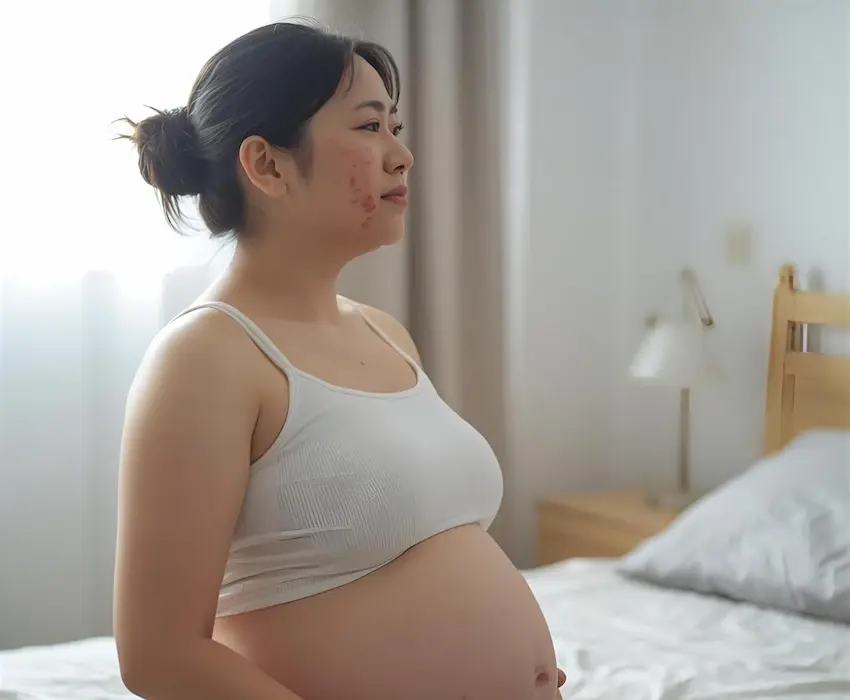
Whenever you notice a new pregnancy symptom, you’re probably desperate to decode its hidden meaning. Are you having a boy or a girl? Could your pregnancy symptoms tell you the gender of your baby?
A popular old wives’ tale concerning pregnancy is that pregnancy acne breakouts are a sure fire sign that you’re expecting a girl. The truth is, you should treat pregnancy acne as a common symptom during pregnancy; it’s experienced by mothers-to-be who are carrying babies of either gender.
Are you ready to banish that pregnancy glow gone wrong? We’ll uncover the real causes, the symptoms, and some acne treatment options during pregnancy!
Causes of pimples during pregnancy
Pimples during pregnancy is a common symptom of pregnancy. According to the European Academy of Dermatology and Venereology, more than half of all pregnant women will develop acne during pregnancy. For many pregnant women, skin breakouts and pregnancy acne are unavoidable during pregnancy.
The hormone level changes caused by pregnancy encourage your skin to produce excess oil (sebum, an oily substance) that clogs your pores, oil glands and hair follicles, leading to infection and inflammation.
Not all women experience pregnancy acne; some actually find their skin improves during pregnancy.
Are pimples during pregnancy common when you are having a boy or a girl?
Although your grandma might insist otherwise, experiencing spots or acne during pregnancy doesn’t mean you’re having a girl. In days gone by, people argued that a daughter would ‘steal’ your looks, leaving you battling pregnancy symptoms such as bad skin and flat hair. Way to go, patriarchy, pitting women against their daughters before they’re even born!
Of course, it was all nonsense. Experiencing acne or skin problems during pregnancy isn’t an indication of your baby’s gender.
Symptoms of pregnancy acne
Symptoms of pregnancy acne breakouts can include:
- Whiteheads
- Blackheads
- Red bumps
- Pustules.
Generally, these symptoms will appear on your face, although it is possible to get acne on other areas of your body, such as your chest, back and neck. Symptoms can vary from mild to severe acne.
Severe cases of pregnancy acne can affect your self esteem, so it’s worth speaking to your doctor about options such as over the counter treatments or acne medications that are safe when you’re pregnant.
What is the difference between normal acne and pregnancy acne?
Are you ready for the mic drop moment? There’s no difference between normal acne and pregnancy acne, other than the fact that you are pregnant. The symptoms and causes are the same for both – hormonal changes in your body – although the acne medications you use during pregnancy might differ because not all acne treatments and over the counter products are safe for use in pregnancy.
How to get rid of pregnancy pimples or acne?
If you’re keen to find your pregnancy glow and get rid of the pregnancy pimples, you’re probably wondering whether there are any tried and tested ways to treat pregnancy acne. The best thing to do is start by trying natural home remedies to clear your skin and oil glands.
Changing your diet, switching to a gentle skin care oil free routine, and avoiding oily makeup could be enough to improve your symptoms and reduce the breakouts on your skin.
If that doesn’t work, it’s time to pay a visit to your pharmacist for over the counter products that are safe to use during pregnancy. Be sure to tell your pharmacist that you’re pregnant before asking for treatment recommendations.
If over the counter medications don’t help your skin breakouts, make an appointment to see your doctor.
5 home remedies can help for pregnancy pimples?
The following natural remedies and alternative treatments might help to improve your symptoms and rid your face of pregnancy pimples:
- Take a hands off approach
Although it can be tempting, you shouldn’t squeeze or pick at your skin, as this increases the risk of infection, permanent scarring and soreness. - Simplify your skin care routine
Your sensitive pregnancy skin is as a result of hormonal changes in your body during pregnancy. You might need to look at alternatives to the harsh lotions and strong chemicals you used before you became pregnant. Switch to a gentle skin cleanser, and use it once or twice a day. Minimise the amount of makeup you wear to keep your pores free from obstruction, and make sure you keep your skin clean and well moisturised. - Avoid oils
Oily sunscreens, makeup and skincare products could be making your skin problem worse. Opt for oil free, water based products for your skin as an alternative. - Stay hydrated
Make sure you are drinking enough water, as it helps your skin stay moist and healthy. If you don’t currently drink much water, try to increase your intake during pregnancy. Add ice and lemon for a cool and refreshing drink. - Eat a healthy, balanced diet
The food you eat is more important than ever during pregnancy. Make sure you’re eating a well balanced diet with plenty of fresh fruits, veggies, lean protein, and whole grains, to support your healthy growing body. Avoid soft drinks and sugary foods; they can increase inflammation and spike hormones in the body, which can worsen the symptoms of skin acne.
What foods help with pregnancy acne?
The food we eat has a huge impact on our bodies. Eating the wrong foods can worsen inflammation and increase the risk of acne symptoms. Inflammation in the body can also increase the risk of obesity, metabolic syndrome and heart disease.
Pregnancy is a fantastic time to make positive changes in your life, thanks to the increased motivation that comes with bringing new life into the world.
Anti-inflammatory foods are a must. They can help to reduce inflammation in the body, so try to include the following in your diet:
- Omega-3 fatty acids, in nuts, seeds and fatty fish
- Vitamin C, in citrus fruits and bell peppers
- Polyphenols, in berries, grapes, and red onions
- Gut-healthy foods, in asparagus, bananas and Jerusalem artichokes.
Skin care for pregnancy pimples
You might need to consider changes to your daily skincare routine to help reduce your symptoms:
- Use a mild cleanser twice daily
- Apply a light moisturiser after cleansing
- Use an oil free sunscreen each day to protect your skin from sun damage.
Treatment for pregnancy acne
If you’re struggling with acne, speak to your doctor about pregnancy safe acne treatments. Although most acne treatments are safe for pregnancy, some should be avoided, due to the risk of adverse effects. You might be prescribed an oral medication, oral antibiotics or topical lotions to improve your symptoms.
Your doctor might suggest trying one of the following to treat pregnancy acne:
- Cefadroxil
- Azelaic acid
- Benzoyl peroxide
- Glycolic acid
- Low dose salicylic acid.
Your doctor may prescribe more severe pregnancy acne treatments – for example, a short course of clindamycin or erythromycin. These medications are not recommended for long term use during pregnancy.
Is acne medication safe to use during pregnancy?
Not all medications are safe to use during pregnancy.
The following acne treatments should be avoided during pregnancy:
- Topical retinoids
- Oral tetracyclines
- High dose salicylic acid (2% or less is considered safe during pregnancy).
Obviously you want effective treatments; it is crucial, however, to tell your doctor or pharmacist about your pregnancy before settling on a treatment option. Not all acne treatments are safe for pregnant women and developing babies, which is why it’s alway important to seek medical advice for treating acne.
Although light and laser therapies are beneficial for treating acne, they aren’t recommended during pregnancy because the effects on fetal development are unknown. You should wait until after your baby is born before opting for laser or light therapies.
Pregnancy acne FAQs
What are pimples on the face during pregnancy?
Pimples on the face during pregnancy are known as pregnancy acne. It’s just like regular acne, but you happen to be pregnant at the time. Some women experience acne for the first time during pregnancy, whereas some long term acne sufferers notice their symptoms disappear. It’s unpredictable and can be influenced by a host of factors, including genetics, lifestyle, changes in hormones and hormone levels.
Why do you get pimples on your face during pregnancy?
If you’ve noticed pimples on your face while pregnant, you’re probably keen to understand why and how to get rid of them. The changing hormones during pregnancy can cause all kinds of side effects, including skin problems such as acne. Increased androgen levels during pregnancy cause your skin glands to produce extra sebum, an oily substance, which then blocks pores and hair follicles, trapping bacteria and causing spots.
Although pregnancy acne most commonly causes pregnancy pimples on the face, they can also occur on other parts of your body, including the back and chest.
When do pregnancy pimples start?
Pregnancy acne can start in early pregnancy, as early as week six. In fact, for some women, it could be an early sign of pregnancy. During the first trimester, your rapidly changing pregnancy hormones can have an impact on your skin. If you already suffer from acne, you might notice the symptoms increase during pregnancy.
The timeline varies for pregnant women so, unfortunately, there’s no way to predict when it might start or end. Some women glide through the first and second trimesters with perfect skin only to suffer breakouts in the third trimester.
What do pregnancy pimples look like?
Pregnancy pimples look just like regular acne. You might notice whiteheads, blackheads and raised red bumps across your face.
Which week is acne worst in pregnancy?
A (very small) 2016 study published in the Journal of the European Academy of Dermatology and Venereology found that pregnancy acne was more prevalent in the second trimester. However, these findings were contradicted by a 2020 study published in the International Journal of Dermatology, which found that severe acne symptoms were worse during the third trimester.
When will pregnancy acne clear up?
Many women find their pregnancy pimples clear up by the end of the second trimester. By the third trimester, many women see an improvement in their skin, although some women will experience acne symptoms for the entire duration of their pregnancy. If you are struggling with your skin, ask your doctor to recommend a spot treatment that’s safe for pregnant women.
Natural remedies for pregnancy pimples
Natural remedies for pregnant patients include lifestyle changes, avoiding harsh skincare products, and switching to a simple daily skincare routine. You can include these changes as part of your regular self care routine to help you relax, allow you to focus on your pregnancy and take care of your body.
What are the symptoms of acne on the face during pregnancy?
The symptoms of facial acne during pregnancy include whiteheads, blackheads, blemishes and red bumps appearing on the face. Pregnancy acne looks just like regular acne, so if you’ve suffered from acne before, you might find your symptoms follow a similar pattern.
Where do pregnancy pimples appear on your body?
Pregnancy pimples are most commonly found on the face, though they can appear on other parts of your body, such as your back, chest, and neck.
Can you get postpartum acne?
Yes, the hormonal rollercoaster of the postpartum period can leave you struggling with your skin after the birth of your baby. The good news is that it should clear up when your hormones stabilise. This could take anywhere from a few weeks to a few months after the birth.